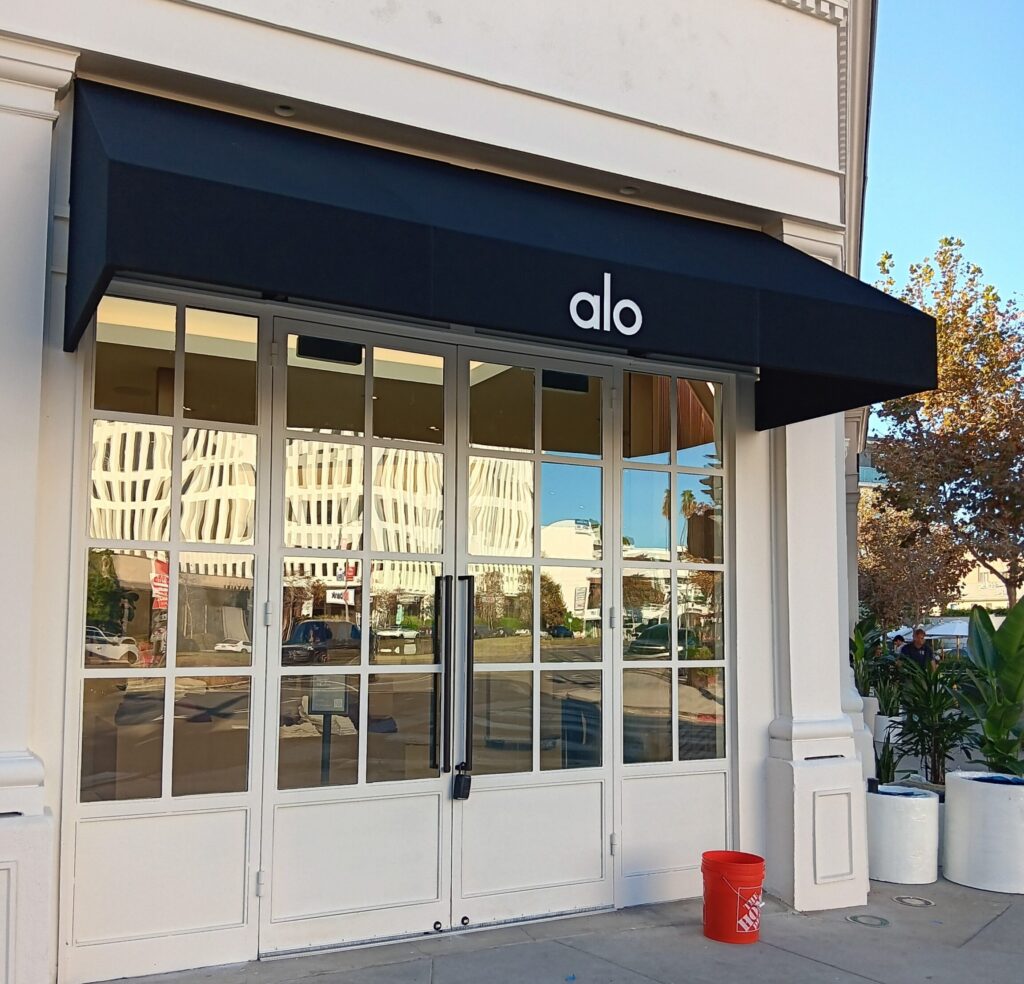

When a retailer calls a store its flagship, everything built for it gets a closer look. That was the case with the fabric awning we built for Alo Yoga in Brentwood, working with Bogart Construction. The awning is one of the first things a customer sees, so details that might pass on a typical storefront get real attention here.
Start with the fabric width
Awning fabric comes in 60 inch widths. Anything wider than that has seams, and on the Brentwood awning the fabric is seamed every 59 inches. Seams are not a flaw to hide. They are a fact of the material, and the layout is planned around them from the beginning instead of discovered after the fabric is cut. When someone asks whether a seam can be avoided on a wide awning, the honest answer is usually no, so the better question is where the seams should land.
The logo and its centering
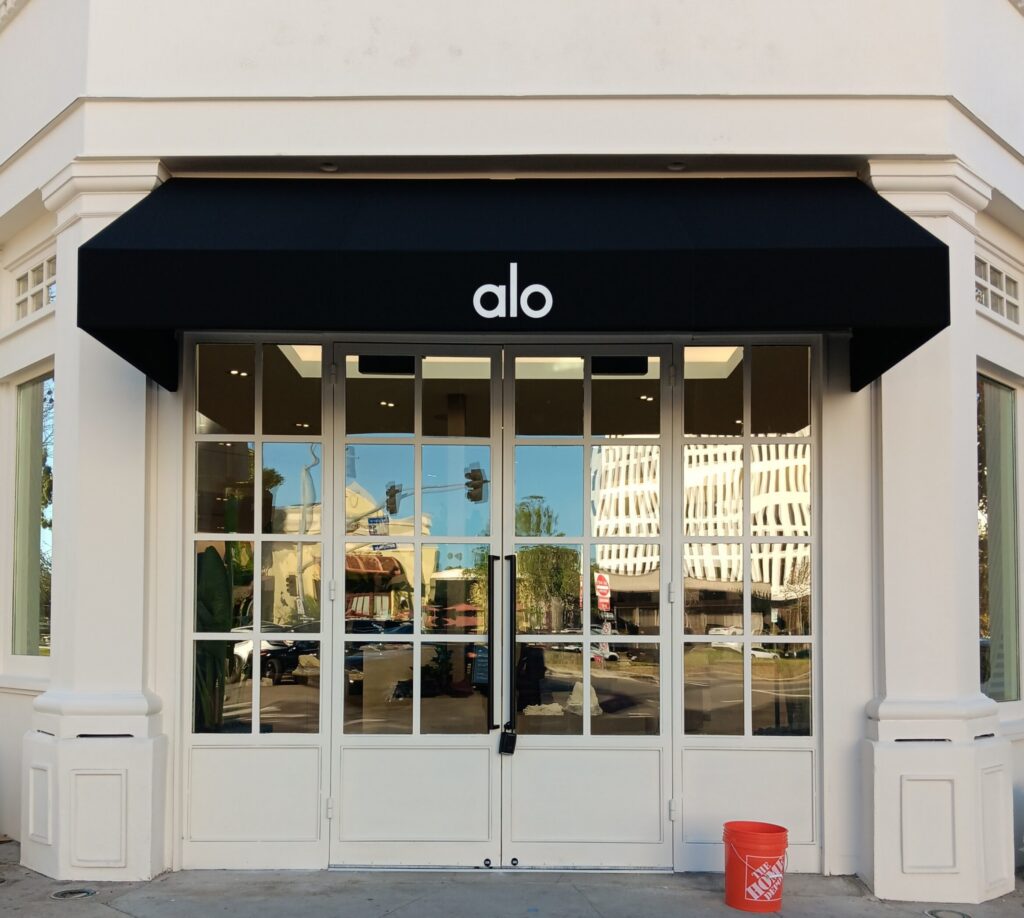
A logo on an awning has to be placed against the shape of the awning face, and it has to work with the seam locations. A logo that sits slightly off center, or lands awkwardly across a seam, is the kind of thing people notice at a flagship even if they cannot say why. The way to get it right is a scaled layout the client can review, with the logo, its centering and the seams all shown together, and an approval before the fabric goes to the sewing table.
Keeping the work in one shop
We fabricate and sew our fabric awnings in our own shop. The pattern, the cutting and the sewing happen under one roof, so a question about a seam or a graphic gets answered by the people doing the work. On a flagship, that matters more than it sounds, because the small decisions are the ones that get seen.
What to tell us early
If you are specifying a fabric awning with a logo or graphic, tell us as early as you can. Fabric width, seam locations, graphic placement and valance height all affect each other, and settling them on a drawing costs a lot less than settling them in the field. A flagship build also has many trades finishing around the same time, so the earlier those details are agreed, the easier it is to hold the schedule.
At a flagship store, the awning is judged from the sidewalk, and the sidewalk does not care how hard it was to build.